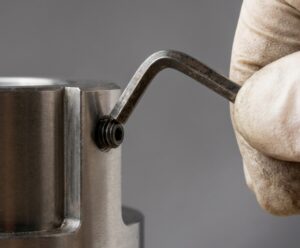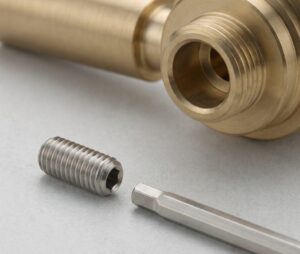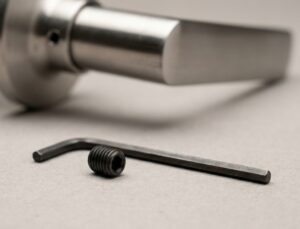
A set screw is a small, headless (or low-profile) fastener designed to lock one part to another—most commonly a hub, pulley, or knob to a shaft—by tightening its threads to press a tip into the mating surface. Selecting the right point style, material, and installation torque determines how well it resists loosening, vibration, and slip in service.
What is set screw?
A set screw is a threaded fastener used to secure a component (like a gear, collar, or pulley) onto a shaft without using a nut. It typically has no protruding head and is tightened so its tip presses against (or bites into) the shaft, preventing rotation or axial movement.
Common Types and Where They’re Used
Set screws work by creating friction and/or a localized mechanical “bite” at the contact point. They’re widely used in power transmission assemblies, fixtures, consumer products, and instrumentation where compact, flush fastening is needed.
- Typical applications
- Locking pulleys, sprockets, and couplings to shafts
- Securing knobs/handles to spindles
- Positioning collars, stops, and guides on rods
- Common drive styles
- Hex socket (Allen): most common, good torque transfer
- Slotted: easy to service but lower torque capacity
- Torx/spline: improved cam-out resistance in production
- Common point styles (tip geometry)
- Cup point: general-purpose, strong holding on shafts
- Flat point: less marring, better on soft shafts or when repositioning
- Cone point: aggressive bite, best for permanent locations
- Dog point: locates into a hole/slot for repeatable positioning
Nytss Pro Tip: When customers ask “which set screw should I use?”, I start by identifying whether the joint must be repositionable. If it must move later, avoid cone points and use flat or dog points with a prepared dimple/flat on the shaft.
How Does set screw Work?
A set screw works by converting tightening torque into axial force along its threads, pushing the screw’s tip into the shaft or mating surface. That contact force creates friction and/or a small indentation that resists slipping, rotation, and axial movement. Proper point style, surface prep, and torque determine reliability under vibration.
Clamping Mechanics and Holding Methods
A set screw “locks” a hub to a shaft through one (or a combination) of these mechanisms:
- Friction lock: tip presses against the shaft, increasing normal force and friction.
- Indentation lock: cup/cone points slightly deform the shaft, creating a mechanical interference.
- Positive location: dog point seats into a drilled hole or slot, resisting shear directly.
Key factors that change performance:
- Thread engagement: more engaged threads generally improves strength and reduces stripping risk.
- Shaft hardness: harder shafts reduce indentation but can improve repeatability with flats/dimples.
- Vibration environment: may require threadlocker, patch, or a secondary retention method.
- Quick “best practice” sequence
- Clean threads and mating area (remove oil/paint).
- Align hub on shaft; add a flat/dimple if needed.
- Tighten to recommended torque; verify no hub slip.
- Add threadlocker or locking feature if vibration is present.
Nytss Pro Tip: In high-vibration assemblies, I treat the set screw as one layer of retention—pair it with a shaft flat/dimple and a medium-strength threadlocker to dramatically reduce back-out failures.
What are the benefits of set screw?
Set screws offer a compact, low-cost way to secure hubs and components to shafts without extra hardware. They sit flush, simplify assembly, and allow precise positioning in tight spaces. With the right point style and installation method, they can provide reliable holding power for light-to-moderate torque transmission and alignment duties.
Practical Advantages in Design and Assembly
Set screws are popular because they reduce part count and enable simple, serviceable joints.
- Core benefits
- Compact and flush: no protruding head to interfere with nearby parts
- Low part count: no nut, washer, or additional clamp hardware required
- Fast assembly: tighten in place with common drivers
- Adjustability: can reposition hubs/collars (especially with flat/dog points)
- Cost-effective: economical for high-volume products and small mechanisms
- When set screws are a great fit
- Moderate loads and torque levels
- Space-constrained housings
- Products needing field adjustment
- When to consider alternatives
- Very high torque transmission (consider keys, splines, clamp hubs)
- Soft shafts where marring is unacceptable (consider clamp collars)
Nytss Pro Tip: If you’re choosing between a set screw hub and a clamp-style hub, I usually recommend clamp-style for higher torque and better shaft friendliness—then reserve set screws for compact, adjustable, or cost-sensitive designs.
How to maintain a set screw?
Maintaining a set screw means keeping the joint clean, correctly torqued, and protected from loosening. Periodically inspect for back-out, corrosion, and shaft wear at the contact point. Reapply threadlocker if used, replace damaged screws, and consider upgrading point style or adding a shaft flat/dimple to prevent recurring slip.
Inspection and Service Checklist
A simple maintenance routine prevents the most common failures: loosening, stripping, and fretting at the shaft.
- Visual check: look for screw back-out, rust, or rounded drive sockets.
- Torque verification: re-tighten to spec; avoid over-torquing small screws.
- Check shaft contact area: confirm no excessive grooving or cracking.
- Clean and reassemble: remove debris/oil; ensure full thread engagement.
- Re-secure against vibration: refresh threadlocker or use a pre-applied patch style screw.
- Signs it’s time to replace the screw
- Rounded hex/Torx drive
- Deformed threads
- Blunted or chipped point
- Repeated loosening despite proper torque and prep
Nytss Pro Tip: If a set screw keeps loosening, I don’t just “tighten harder”—I inspect thread engagement, add a shaft flat/dimple, and switch to a locking method (threadlocker or nylon patch). That combination solves most repeat failures.
What is the price of set screw?
Set screw pricing depends on size, material, point style, coating, and order volume. Standard alloy or stainless set screws are typically inexpensive per piece in bulk, while specialty materials, locking patches, and tight tolerances increase cost. The most accurate pricing comes from matching the exact specification to the application’s load and environment.
Typical Price Drivers (What Changes Cost Most)
- Primary factors
- Diameter and length: larger sizes cost more
- Material: alloy steel vs. stainless vs. specialty alloys
- Coating/finish: black oxide, zinc, nickel, passivation, etc.
- Point style: cone/dog points can be pricier than standard cup/flat
- Locking feature: nylon patch or pre-applied threadlocker adds cost
- Volume and packaging: bulk cartons vs. small kits
- Practical guidance
- For general indoor use, standard alloy steel with a common point style is usually the best value.
- For corrosion exposure, stainless or coated alloy steel may reduce lifetime cost despite higher unit price.
Nytss Pro Tip: When estimating budget, I factor in “cost of failure” (rework, downtime, warranty) and often justify a slightly higher-priced set screw with a locking patch or better coating—especially in vibration or humid environments.
Key Features & Comparison
Set screws vary mainly by material, point style, drive type, and surface finish—each changing holding strength, shaft damage risk, corrosion resistance, and serviceability. Comparing these features side-by-side helps you choose the right balance for torque transmission, repositioning needs, and operating environment without overspending on unnecessary specifications.
Feature-by-Feature Selection Guide
Based on our internal data and market analysis, here is the breakdown:
| Feature | Common Options | Best For | Trade-Offs / Notes |
|---|---|---|---|
| Material | Alloy steel, Stainless (304/316), Specialty alloys | Strength (alloy) or corrosion resistance (stainless) | Stainless can gall; alloy may need coating |
| Point style | Cup, Flat, Cone, Dog | Cup for general holding; flat for minimal marring; dog for repeatable positioning | Cone can damage shafts; flat may slip under high torque |
| Drive type | Hex socket, Torx, Slotted | Hex/Torx for higher torque and production | Slotted is easier to damage/cam-out |
| Locking method | None, Nylon patch, Threadlocker | Vibration resistance | Patches change prevailing torque; threadlocker affects serviceability |
| Finish/coating | Black oxide, Zinc, Nickel, Passivated (SS) | Corrosion control and appearance | Coatings can affect friction/torque relationship |
| Installation surface | Plain shaft, Shaft flat, Dimple/hole | Higher holding and repeatability | Requires shaft prep step |
Nytss Pro Tip: If you need repeatable assembly and strong holding, I prefer a dog point into a prepared hole/slot or a cup point onto a shaft flat—those two setups dramatically reduce variability compared with “cup point on a round shaft.”
Cost & Buying Factors
Buying the right set screw is less about the lowest unit price and more about matching specification to risk: torque, vibration, corrosion exposure, and service frequency. The best value comes from standardizing sizes and drive styles, choosing the simplest point that meets holding requirements, and adding locking/coating only when the environment demands it.
A Practical Purchasing Checklist
- Define the application requirements
- Required holding torque and axial retention
- Vibration level (low/medium/high)
- Corrosion exposure (indoor, humid, chemical, outdoor)
- Need for repositioning or permanent set
- Choose specifications that control total cost
- Standardize on a few sizes and drive types to reduce inventory.
- Select point style based on shaft prep and marring tolerance.
- Add locking only if testing/field data shows loosening risk.
- Verify thread class and engagement to avoid stripping and rework.
- Confirm compatibility (e.g., stainless-on-stainless galling risk).
- Documentation to request from a supplier
- Material certification, coating spec, RoHS/REACH where needed
- Dimensional tolerances, hardness (for alloy steel), and lot traceability
Nytss Pro Tip: When I’m sourcing for production, I standardize on hex socket cup-point set screws unless there’s a clear reason not to—then I upgrade selectively (locking patch, stainless, dog point) based on test results and environment.
Conclusion
A set screw is a compact fastener that locks hubs and components to shafts by pressing a tip into the mating surface, relying on friction, indentation, or positive location. The right point style, material, and locking method determine long-term reliability. If you share your shaft size, material, environment, and load, Nytss can help narrow the best set screw specification quickly.