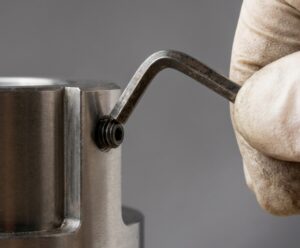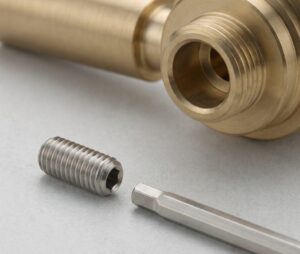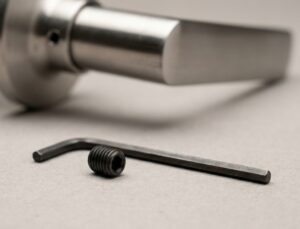
The primary difference between a set screw and a regular screw lies in their design and application. While a regular screw features a distinct head used to bind two separate components together through clamping force, a set screw is typically headless. It is driven entirely into a threaded hole to secure an object within or against another, such as locking a pulley to a shaft. Understanding this fundamental distinction ensures you select the correct fastening solution for your mechanical assemblies.
What is set screw?
A set screw, also known as a blind screw or grub screw, is a type of fastening hardware designed without a protruding head. It is entirely threaded and driven into a pre-tapped hole to generate compressive force, locking an inner component, like a shaft, to an outer component, like a gear.

Anatomy and Fastening Design
Set screws are unique because they rely on compressive friction rather than the clamping force typical of headed screws. They feature various drive types (like hex or slotted) recessed directly into the top of the cylinder, alongside different point styles designed for specific grip requirements.
- Cup Point: The most common style, offering excellent grip on round shafts by cutting slightly into the material.
- Flat Point: Ideal for frequent adjustments without damaging or severely marring the underlying shaft.
- Cone Point: Provides the highest holding power for permanent settings, often acting as a pivot or hanger.
- Dog Point: Features a protruding flat tip that fits into a pre-drilled hole or groove for exact alignment.
NYTSS Pro Tip: Always match the set screw point style to the hardness of your shaft material. Using a standard cup point on a hardened steel shaft may not bite effectively, leading to slippage under high torque loads.
How Does set screw Work?
A set screw works by being threaded through an outer component until its point presses firmly against an inner component. This action creates immense compressive friction between the two parts, preventing relative movement. The specific point style determines how aggressively the screw bites into the mating surface.

The Mechanics of Compressive Fastening
Unlike regular screws that hold parts together by pulling them with a head, set screws push parts apart slightly to lock them via friction. The rotational force applied to the internal drive translates into axial pressure at the screw’s tip, securing the mechanical joint.
Based on our internal data and market analysis, here is the breakdown:
| Component | Function in the Fastening Process |
|---|---|
| Outer Housing | Contains the internally threaded hole to guide the set screw. |
| Set Screw Threads | Convert rotational torque into downward compressive pressure. |
| Set Screw Point | Contacts the inner shaft, generating friction or mechanical interference. |
| Inner Shaft | Receives the pressure, locking it firmly against the opposite side of the housing. |
NYTSS Pro Tip: To maximize holding power and prevent loosening from vibration, apply a medium-strength threadlocker to the set screw before installation, ensuring a secure and long-lasting hold.
What are the benefits of set screw?
The primary benefits of a set screw include its low-profile, headless design, which prevents interference with moving parts. They offer high structural integrity in rotational applications, allow for precise adjustments, and provide exceptional holding power without requiring a protruding head that could cause safety hazards or clearance issues.
Advantages in Mechanical Assemblies
Set screws are indispensable in power transmission and motion control engineering. Their flush installation makes them ideal for high-speed rotating equipment where balance, aerodynamics, and spatial clearance are absolutely critical.
- Aerodynamic Profile: The lack of a head eliminates drag and imbalance on rotating pulleys, gears, and collars.
- Space Efficiency: Perfect for tight mechanical spaces where a standard bolt head simply would not fit.
- Customizable Grip: Interchangeable point styles allow engineers to tailor the mechanical bite to the specific application.
- Vibration Resistance: When torqued correctly, the compressive force inherently resists loosening better than standard clamping forces.
NYTSS Pro Tip: When securing a pulley or gear subjected to reversing loads, use two set screws positioned at a 90-degree angle to each other. This configuration exponentially increases the holding power and resists dynamic rotational forces.
How to maintain a set screw?
Maintaining a set screw involves regular visual inspections for signs of backing out, periodically checking torque values with a calibrated wrench, and monitoring the surrounding components for galling or wear. Keeping the threads clean and reapplying threadlocker during reassembly ensures continued mechanical reliability.

Routine Inspection and Care
Because set screws are often used in high-vibration environments, proactive maintenance is vital to prevent catastrophic mechanical failures. Proper lubrication, cleanliness, and torque management are the cornerstones of set screw longevity.
- Clean the Drive: Ensure the hex or torx socket is free of dirt, debris, and grease before inserting a tool to prevent stripping the drive.
- Verify Torque: Use a calibrated torque wrench to confirm the screw meets the manufacturer’s specified tension limits without over-tightening.
- Inspect for Shaft Damage: Periodically remove the screw to check if the point has excessively deformed or gouged the underlying shaft.
- Reapply Threadlocker: If a set screw is removed for maintenance, thoroughly clean the internal threads and apply fresh chemical locking compound before reinstalling.
NYTSS Pro Tip: Never over-torque a set screw to compensate for a slipping shaft. If slippage occurs at the correct torque, consider switching to a more aggressive point style or machining a small flat onto the shaft to provide a better seating surface.
What is the price of set screw?
The price of a set screw ranges from a few cents for standard alloy steel variants to several dollars for specialized, aerospace-grade titanium or custom-machined options. Costs are primarily dictated by the material, thread size, point style, and the total volume of the purchase.
Pricing Variables and Material Costs
While generally inexpensive on an individual basis, the cost of set screws scales rapidly with the demands of the application. High-corrosion environments or extreme temperature applications require premium alloys that significantly impact the unit price.
Based on our internal data and market analysis, here is the breakdown:
| Material / Type | Estimated Cost per Unit (Bulk) | Best Application |
|---|---|---|
| Carbon Steel | $0.05 – $0.20 | General indoor machinery, locking collars, and dry environments. |
| Stainless Steel (316) | $0.25 – $0.80 | Marine, food processing, or highly corrosive environments. |
| Brass | $0.30 – $1.00 | Soft shafts where marring or scratching must be completely prevented. |
| Titanium | $2.00 – $5.00+ | Aerospace, competitive racing, and high-performance engineering. |
NYTSS Pro Tip: Buying set screws in bulk directly from a specialized fastener distributor rather than a local hardware store can reduce your per-unit cost by up to 70%, especially for specialty materials like 316 stainless steel.
Key Features & Comparison
The key features of a set screw versus a regular screw highlight their fundamentally different engineering purposes. Set screws provide flush, compressive locking without a head, whereas regular screws utilize a protruding head to clamp two separate materials together through tensile force.
Technical Comparison: Set Screw vs. Regular Screw
Understanding the mechanical distinctions between these two fasteners is critical for proper joint design. The choice between them dictates whether a mechanical joint relies on internal tension or external compression.
Based on our internal data and market analysis, here is the breakdown:
| Feature | Set Screw | Regular Screw (e.g., Cap Screw) |
|---|---|---|
| Head Design | Headless (fully threaded cylinder) | Protruding head (hex, pan, flat, etc.) |
| Primary Force | Compressive (pushing parts apart to lock) | Tensile (clamping parts tightly together) |
| Typical Application | Locking collars, securing gears to shafts | Joining panels, structural framing, housing assembly |
| Space Requirement | Zero clearance (flush mount capability) | Requires vertical and lateral clearance for the head |
| Engagement Method | Point bites directly into the inner material | Head compresses against the outer material |
NYTSS Pro Tip: If you are designing an assembly that requires both structural clamping and rotational locking, use a regular screw to clamp the outer housing, and a set screw to lock the internal rotating shaft.
Cost & Buying Factors
When purchasing set screws, the primary buying factors include material compatibility, point style required for the shaft hardness, thread pitch, and environmental conditions. Evaluating these factors ensures you procure a fastener that prevents mechanical failure while optimizing your project budget.
Strategic Procurement Criteria
Sourcing the right set screw requires balancing operational performance requirements with cost. Selecting the wrong material can lead to rapid galvanic corrosion, while the wrong point style can cause irreversible damage to expensive machined shafts.
- Material Selection: Match the screw material to the working environment (e.g., stainless steel for moisture exposure, alloy steel for high-torque demands).
- Point Style: Assess whether the application requires permanent, aggressive biting (cup/cone) or frequent, non-marring adjustments (flat/nylon tip).
- Drive Type: Hex socket drives are standard, but Torx drives offer superior torque transfer without stripping in high-stress applications.
- Certifications: Ensure the fasteners meet the required ASME, ISO, or DIN standards necessary for your specific industrial applications.
NYTSS Pro Tip: For applications involving soft metals like aluminum or brass shafts, invest slightly more in nylon-tipped set screws. They provide excellent friction without gouging the shaft material, ultimately saving you money on expensive replacement parts.
Conclusion
In conclusion, the difference between a set screw and a regular screw centers on their design and mechanical function. Set screws offer a headless, compressive locking solution ideal for securing rotating components, while regular screws provide the tensile clamping force necessary for joining structural parts.
Final Thoughts on Fastener Selection
Choosing the correct fastening hardware is a foundational aspect of mechanical engineering and assembly. By understanding how set screws utilize compressive friction and specific point styles to secure components, you can design safer, more efficient, and longer-lasting machinery.
- Assess the mechanical load and dynamic rotational forces of your assembly.
- Determine the necessary spatial clearance and aerodynamic profile.
- Select the appropriate point style and material to match your shaft hardness.
- Partner with a trusted fastener supplier like NYTSS for guaranteed quality assurance.
NYTSS Pro Tip: Always keep a standardized assortment of set screws in your facility’s maintenance kit. Having the exact thread pitch and point style on hand minimizes costly downtime during critical equipment repairs.