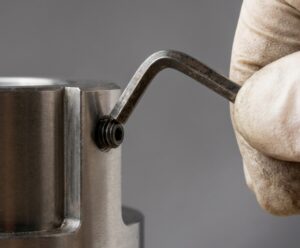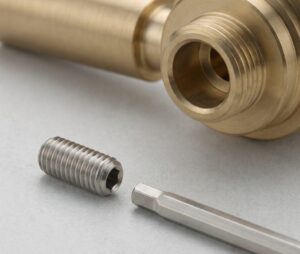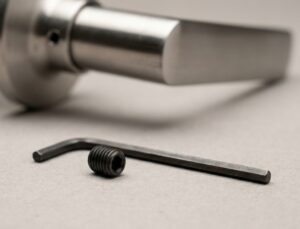
The primary function of a set screw is to secure an object within or against another object without the need for a traditional nut. Typically used in mechanical engineering and manufacturing, these specialized fasteners prevent relative motion between rotating parts, such as securing a pulley or gear to a shaft. By exerting compressive force through its tip, a set screw ensures structural integrity and precise alignment in high-stress assemblies.
What is function of a set screw?

The core function of a set screw is to lock two independent components together, usually securing a rotating part like a collar or gear onto a central shaft. By threading completely into the outer part and pressing firmly against the inner shaft, it provides vital resistance against rotational movement.
Mechanical Locking Mechanism
Set screws operate differently from standard bolts because they do not rely on a head to hold parts together. Instead, they are fully threaded and driven internally to create immense clamping force at the exact point of contact between two components.
- Friction Grip: The tip bites into the shaft, creating high friction to resist torque.
- Alignment Retention: Keeps gears, sprockets, and pulleys perfectly aligned during rapid rotation.
- Space Efficiency: The headless design allows the fastener to sit flush, avoiding interference with other moving parts in tight clearances.
NTSS Pro Tip: Always match the set screw’s point style to the hardness of the shaft material. Using a hardened cup point on a softer shaft maximizes holding power and prevents surface slipping under heavy loads.
How Does function of a set screw Work?

A set screw works by converting rotational torque applied by a hex key into direct compressive force. As the screw advances through the tapped hole of the outer component, its point makes rigid contact with the inner shaft, locking both pieces through friction or material deformation.
Force Transmission and Point Engagement
The effectiveness of a set screw depends entirely on the axial thrust generated during tightening. The tip geometry plays a crucial role in how this force is distributed and how the mechanical lock is achieved.
Based on our internal data and market analysis, here is the breakdown:
| Point Type | Mechanism of Action | Ideal Application |
|---|---|---|
| Cup Point | Cuts a circular ridge into the shaft for maximum friction | Standard locking on soft to medium shafts |
| Flat Point | Presses flat without damaging the surface | Frequent resetting or thin-walled shafts |
| Cone Point | Penetrates deeply into the material like a wedge | Permanent settings in high-torque environments |
NTSS Pro Tip: When dealing with high-vibration machinery, apply a medium-strength threadlocker to the set screw threads before installation. This prevents the screw from backing out over time due to harmonic resonance.
What are the benefits of function of a set screw?

The primary benefits include a highly compact design, exceptional holding power in rotational applications, and the ability to sit flush within a component. This headless configuration prevents mechanical interference, enhances safety by eliminating protruding edges, and offers a highly cost-effective fastening solution.
Operational Advantages in Assembly
Using set screws provides significant advantages over traditional keyed shafts, clamped collars, or standard hex bolts, particularly in space-constrained and dynamic environments.
- Zero Protrusion: Flush installation prevents snagging on belts, clothing, or adjacent machinery, drastically improving operational safety.
- Infinite Adjustability: Allows for precise positioning along a shaft before final tightening, unlike fixed keyways.
- Weight Reduction: Eliminates the need for bulky flanges, external nuts, or heavy protruding bolt heads.
- Cost Efficiency: Streamlines manufacturing by requiring only a simple, single tapped hole rather than complex machining.
NTSS Pro Tip: To maximize the benefits in heavy-duty applications, use two set screws positioned at a 90-degree angle to each other. This configuration exponentially increases the holding power against rotational slipping.
How to maintain a function of a set screw?
Maintaining a set screw involves regular visual inspections for backing out, periodic re-torquing to specified limits, and checking for signs of corrosion or thread wear. Proper maintenance ensures the screw retains its clamping force and prevents catastrophic slippage of critical rotating components.
Routine Inspection and Upkeep
Because set screws are often subjected to intense vibration and thermal cycling, a proactive maintenance schedule is essential to prevent mechanical failure and extend the lifespan of the assembly.
- Torque Verification: Use a calibrated torque wrench to verify the screw hasn’t loosened during operation.
- Corrosion Check: Inspect for rust, especially in humid or chemical environments, and replace degraded screws immediately.
- Threadlocker Reapplication: If a screw is removed for adjustment, clean the threads thoroughly and apply fresh thread-locking fluid.
- Hex Drive Inspection: Ensure the internal socket isn’t stripped, which would prevent proper tightening or future extraction.
NTSS Pro Tip: Never over-torque a set screw during routine maintenance. Overtightening can strip the internal threads of the outer component or crack the screw itself, leading to immediate structural failure.
What is the price of function of a set screw?
The price of a set screw ranges from a few cents for standard carbon steel variants to several dollars for specialized, high-alloy, or custom-machined aerospace grades. Costs are primarily dictated by material composition, thread size, point style, and the required manufacturing tolerances.
Pricing Variables and Material Costs
Understanding the cost structure of set screws helps in selecting the right fastener for your budget without compromising the mechanical integrity of your project.
Based on our internal data and market analysis, here is the breakdown:
| Material Grade | Average Cost per Unit (USD) | Best Use Case |
|---|---|---|
| Carbon Steel (Black Oxide) | $0.05 – $0.20 | General indoor machinery and low-moisture environments |
| Stainless Steel (304/316) | $0.15 – $0.80 | Corrosive, outdoor, or food-grade environments |
| Brass / Nylon | $0.20 – $1.00 | Non-marring, low-conductivity, or aesthetic needs |
| Titanium / Specialty Alloy | $2.00 – $10.00+ | Aerospace, marine, or extreme high-stress applications |
NTSS Pro Tip: Buying in bulk directly from a reputable manufacturer like NTSS significantly reduces the per-unit cost, especially for high-volume production runs requiring premium stainless or alloy steel.
Key Features & Comparison
When evaluating fastening methods, it is crucial to understand how set screws compare to traditional bolts. The headless design of a set screw fundamentally changes its application scope, prioritizing internal clamping over external binding.
Based on our internal data and market analysis, here is the breakdown:
| Feature | Set Screw | Traditional Hex Bolt |
|---|---|---|
| Head Design | Headless (Internal Drive) | External Head (Hex, Pan, etc.) |
| Primary Function | Secures parts against each other via tip pressure | Clamps parts together via head and nut |
| Space Requirement | Minimal (Sits flush or below surface) | High (Requires clearance for head/tool) |
| Vibration Resistance | High (Especially with cup/cone points) | Moderate (Often requires washers) |
| Installation Tool | Hex Key / Allen Wrench | Wrench / Socket |
Cost & Buying Factors
When purchasing set screws, the initial unit cost is only one part of the equation. Buyers must consider the total cost of ownership, which includes the longevity of the fastener and its performance under stress. Material selection is the biggest cost driver; while carbon steel is economical, investing in 316 stainless steel or alloyed metals prevents costly downtime caused by corrosion or shearing. Furthermore, thread pitch (coarse vs. fine) and point style will influence the manufacturing cost. Fine-threaded set screws typically cost slightly more due to the precision required during machining but offer superior adjustment capabilities and vibration resistance. Sourcing from certified suppliers like NTSS ensures consistent quality control, reducing the hidden costs of fastener failure.
Conclusion
The function of a set screw is indispensable in modern mechanics, offering a streamlined, powerful method for securing moving components. From their space-saving headless design to their versatile point styles, these fasteners provide unparalleled rotational locking power. By understanding their working principles, maintenance requirements, and material costs, engineers can optimize their assemblies for both safety and efficiency. For high-quality, precision-engineered set screws tailored to your specific industrial needs, trust NTSS to deliver reliable fastening solutions that keep your machinery running smoothly.